
Our Ingredients
The history, benefits, and science behind every herb, root, and extract we use.
Now and then you come across herbal ingredients on a product label or flashed in an advertisement and wonder, “What exactly does that ingredient do?” Well, we did that enough to realize that some people are okay with not knowing what’s in a product.
We’re not okay with that. As formulators, we must know everything about the ingredients we put in our products — the history, benefits, effects, uses, and all — and we want to make sure you have access to information about the botanical ingredients too.

Artichoke
Artichoke is a species of thistle that is often used for food, especially in Mediterranean diets. It has also long been implemented in herbal medicines, particularly for its antioxidant benefits and its choleretic and diuretic activities. In some studies artichoke leaf extracts have also demonstrated “antioxidative and protective properties against hydroperoxide-induced oxidative stress.”1

Cascara Sagrada
Cascara Sagrada is a botanical laxative of natural origin. When taken in small quantity, its laxative effect on the large bowel has been shown to lead to favorable changes in absorption, secretion, and motility.2 The bark, or historically called “sacred bark,” helps increase the peristaltic action of the colon, and can help relieve and regulate the bowels.3

Coffee Bean
Coffee bean is a widely used natural source of caffeine, with each bean on average containing 1.1% to 1.4% caffeine.4 Coffee beans also have been shown to exhibit potent antioxidant activity,5 which is attributed to its polyphenolic content. Coffee bean is generally considered a safe source of caffeine by the merits of its global use and acclaim — to speak little of its wealth of other benefits.

Dandelion
Dandelion, today and for ages, has been used for minor digestive problems and diuresis.6 With dandelion’s naturally high phenolic content, it should not be passed over because of its botanical antioxidant activity. The flower has also been shown to favorably affect different processes in the adipocyte life cycle — by attenuating adipose tissue growth and promoting lipolysis,7 it can play a beneficial role in oxidative stress.

Eleuthero Root
Eleuthero Root, also colloquially called Siberian Ginseng and other appellations, is a unique root with a deep history in Chinese medicine. This plant is useful for its metabolites (substances aiding in metabolism), and has been used to improve human’s physical and mental efficiency.8 The roots of Eleuthero are often harvested for their use as an adaptogen, possessing antioxidant and antimicrobial activities.9

Ginseng
Ginseng comes in many forms and from many regions, and is generally sought as an immune system booster and stimulant, and also for loss of appetite and improved digestion.10 American ginseng’s ginsenosides, or natural product steroid glycosides, play a significant role in the health of the central nervous system and metabolism.11

Milk Thistle
Milk Thistle, otherwise known as silymarin, is a popular herbal supplement with liver-targeting activities.12 Silymarin extracts have been shown to inhibit several P450s13 in vitro, enzymes that catalyze the oxidative metabolism in the human liver, which significantly help cellular metabolism and can lead to the altering of immune and inflammatory responses.
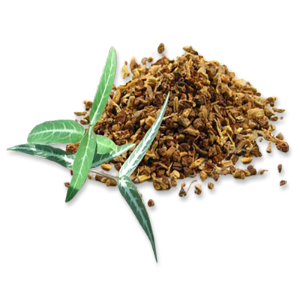
Sarsaparilla
Sarsaparilla root is widely used for its capability in detoxicating, clearing heat and relieving dampness.14 It has been used as an herbal treatment to scurvy, rheumatism, psoriasis, and more;15 while one of its most prominent benefits is its rich phenolic content (which can act as an antioxidant) and concomitant anti-inflammatory activities.
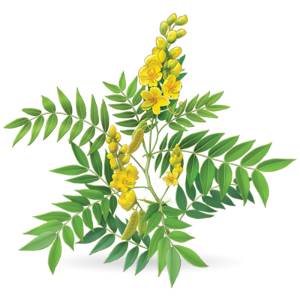
Senna
Senna is an herbal laxative and a vital aid in gastrointestinal motility. When compared to Cascara Sagrada, its role in colon motility is more focused on the peristaltic action, or push, with a reduced absorption of water and electrolytes.16 Senna’s powerful sennosides (anthraquinone glycosides) are highly and globally sought for their help in natural alleviation of constipation.17

Yohimbe
Yohimbe bark has historically been used as a stimulant of the nervous system; and, being confamilial with coffee, it has also been used to counteract fatigue and increase endurance for work.18
Sources
- Antioxidative and protective properties of artichoke leaf extracts — NCBI PMC3958332
- Cascara — effects on absorption, secretion, and motility — PubMed 10215727
- Cascara — bowel relief and regulation — NCBI PMC2372710 (PDF)
- Caffeine content of coffee beans — Caffeine Informer
- Coffee bean antioxidant activity — NCBI PMC4626150
- Dandelion overview — NCCIH (NIH)
- Dandelion effects on adipose tissue and lipolysis — NCBI PMC5635758
- Eleuthero — physical and mental efficiency — NCBI PMC5075622
- Eleuthero — antioxidant and antimicrobial activities — NCBI PMC4946861
- Ginseng — appetite and digestion — MedlinePlus
- Ginsenosides and the central nervous system — PubMed 18772102
- Milk thistle at a glance — NCCIH (NIH)
- Silymarin inhibition of P450 enzymes — NCBI PMC4164972
- Sarsaparilla — detoxifying and clearing heat — NCBI PMC4351248
- Sarsaparilla — scurvy, rheumatism, psoriasis — NCBI PMC4363603
- Senna — water and electrolyte absorption — NCBI PMC3672319
- Sennosides and natural relief of constipation — NCBI PMC4476680
- Yohimbe — fatigue counteraction and endurance — NCBI PMC5068365
See these ingredients in action
My Gentle Detox and Extreme Energy use the herbs above in precise, tested doses.
Shop Products
